The assumption that catches manufacturers out with their manufacturing insurance
Ask most manufacturing business owners if their premises and equipment are insured, and they’ll say yes. What fewer realise is that their standard commercial property policy likely does not cover the risk that poses the greatest operational threat to their business – machinery breaking down.
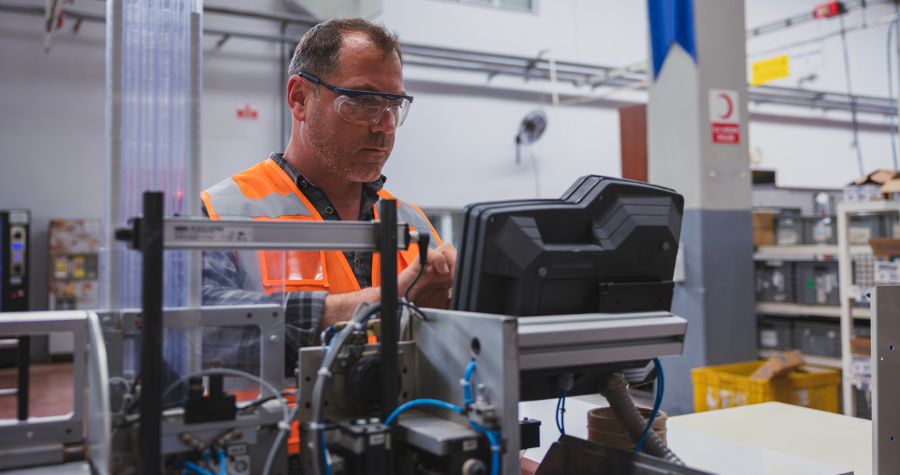
It’s a common and costly misconception. Standard property insurance covers external events: fire, flood, storm, theft. It does not cover internal mechanical failure, electrical faults, or operator error. For a business whose entire output depends on production equipment running reliably, that’s a significant gap.
What machinery breakdown insurance actually covers
Machinery breakdown insurance – sometimes arranged as engineering breakdown cover – is designed for sudden and unforeseen failure of plant and equipment. That includes mechanical and electrical faults, motor and drive failures, control panel damage, and in many cases operator error.
Critically, the repair cost is only part of the picture. Cover for the repair of the machine is only half the solution – the associated business interruption cover is often the more important element, kicking in to cover the financial loss resulting from downtime, including increased costs of working such as outsourcing, hiring replacement machinery, or paying overtime to clear backlogs once repairs are complete.
For manufacturers operating to tight delivery schedules, this matters enormously. A critical machine down for two or three weeks doesn’t just cost the repair – it costs missed delivery slots, potential customer penalties, emergency outsourcing, and in some cases permanent damage to client relationships.
The indemnity period problem
One of the most common mistakes we see when reviewing manufacturing insurance programmes is an indemnity period that’s too short. The indemnity period is the length of time the insurer will pay for business interruption following a covered event. Many manufacturers set it at 12 months without considering how long a genuine worst-case scenario would take to fully recover from.
For businesses that depend on specialist machinery with long lead times for parts or replacement – which describes a significant proportion of UK manufacturers – an indemnity period of 18 or 24 months is often more appropriate. Setting it too short means cover runs out before the business has fully recovered, leaving the gap to be absorbed internally.
Product liability: the long tail most manufacturers underestimate
Beyond machinery and property, product liability is the other area where manufacturing businesses frequently carry more risk than they realise.
If a product you manufacture causes injury, property damage, or financial loss to a third party – whether a direct customer or an end user further down the supply chain – you can be held liable. Product liability claims can arise years after the product left your facility, involve multiple parties, and generate legal costs well before any compensation is determined. The financial exposure can be substantial, particularly for manufacturers supplying safety-related products, food and drink, industrial equipment, or components used in high-risk applications.
It’s also worth checking that your product liability limits are appropriate for the contracts you’re working under. Larger clients increasingly specify minimum liability limits as a condition of supply – being underinsured here can affect your ability to retain or win business.
A complete manufacturing insurance programme
A well-structured programme for a UK manufacturer should typically include public liability, employers’ liability, product liability, material damage to premises and stock, machinery breakdown, business interruption with an appropriate indemnity period, and goods in transit for finished product and raw materials. Depending on the nature of the operation, additional covers – cyber liability, management liability, engineering inspection – may also be relevant.
At Readhunt, we take the time to understand how a manufacturing business actually operates before recommending cover – the production processes, the critical assets, the contractual obligations, the supply chain. Generic policies rarely fit manufacturing well. Tailored ones do.
If you’d like an honest review of your current manufacturing insurance programme, call us on 01709 278178 or visit readhunt.co.uk