
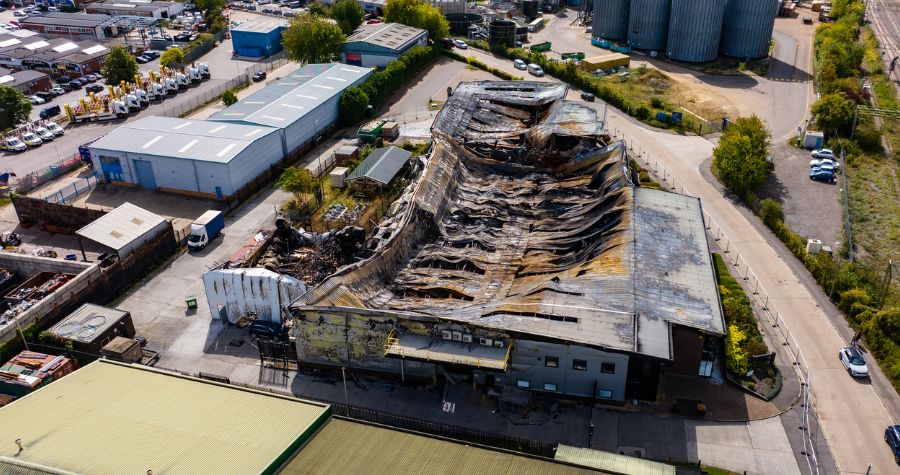
When most people picture construction insurance claims, they picture damage – a fire on site, a flood through unfinished works, a theft of plant or materials. But for many contractors, the physical loss is not what actually hurts the business. It’s the delay that follows.
A stalled project doesn’t just pause work. It sets off a chain reaction: contract penalties for missed deadlines, labour standing idle on the payroll, hired equipment racking up costs while it sits unused, disputes with clients over timelines, and – often the most damaging of all – the loss of the next contract because the business couldn’t move on to it. Add these together and the financial impact of a delay can easily outstrip the cost of the original damage.
The Question Contractors Should Really Be Asking
“Are we insured?” is the wrong starting point. The better question is: if something happened on site tomorrow, how quickly could we recover and get back to work?
That single question shifts the focus from the policy document to the process behind it – how a claim is handled, how fast a loss adjuster is instructed, how quickly funds are released, and how proactively a broker manages the claim rather than simply processing it. For SME contractors in particular, where cash flow and reputation are tightly linked to delivery dates, this can be the difference between a difficult few weeks and a genuinely damaging year.
Why Risk Management Matters as Much as the Policy
Robust risk management – from site security and fire prevention to contractual protections against delay-related loss – reduces the likelihood of a claim in the first place. But no risk management plan removes the possibility entirely, which is why claims support has to be considered part of the same conversation, not an afterthought once cover is in place.
According to the British Insurance Brokers’ Association (BIBA), specialist broker involvement – particularly at the point of claim – is one of the clearest ways SMEs can improve outcomes and speed of resolution, since brokers can advocate on the client’s behalf rather than leaving the business to navigate the process alone. The Association of British Insurers (ABI) similarly highlights that construction remains one of the more complex sectors for claims handling, given the number of parties, contracts, and interdependencies typically involved on a single project.
For SME contractors weighing up cover, the British Business Bank also notes that resilience planning – including adequate insurance and access to working capital during disruption – is a recurring factor in which smaller construction businesses recover fastest from unexpected setbacks.
Building Recovery Into the Plan, Not Just the Policy
The businesses that recover fastest from a construction claim are rarely the ones with the biggest policy limits. They’re the ones who went into the process with a broker who understood their contracts, their supply chain, and their appetite for risk – and who treated claims support as part of the relationship, not a separate transaction after something goes wrong.
That’s the conversation worth having before the damage happens, not after.
Readhunt works with SME contractors across the UK to build insurance programmes around how a business actually operates on site – not just what it owns.
Get in touch with our team to discuss your insurance and project risk.