Download Our Guide for Haulage Businesses to Understand Operational Risks - ‘Moving Goods & Managing Risk’

Category: Cyber Insurance

  • AI Is Changing AI Business Risk – Is Your AI Business Risk Insurance Keeping Pace?

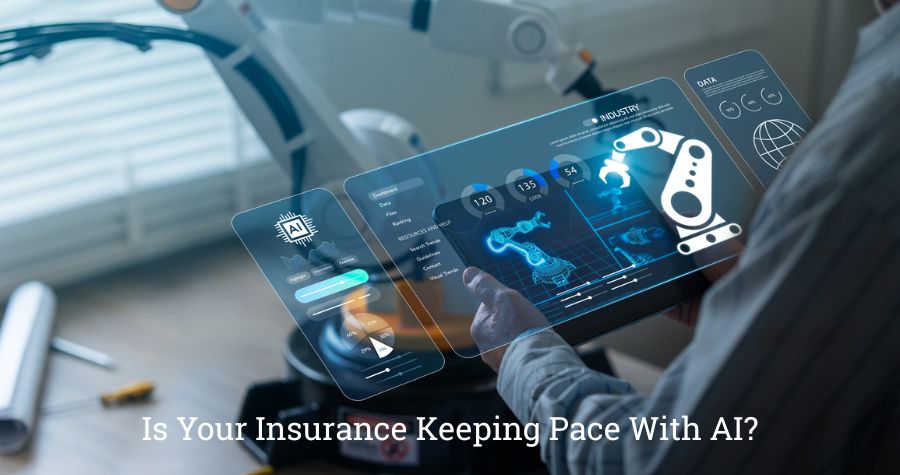
    AI Is Changing AI Business Risk – Is Your AI Business Risk Insurance Keeping Pace?

    Artificial intelligence is no longer something businesses are planning to adopt in the future, it’s a business risk that your insurance needs to cover. Your business needs to evaluate its AI business risk now.

    AI is already embedded into day-to-day operations.

    Employees are using AI to prepare reports, write marketing content, analyse data, assist with customer communications and improve productivity. Increasingly, AI is also supporting operational decisions across manufacturing, construction, logistics and professional services.

    For many organisations, this has happened organically – with little formal governance or consideration of how AI changes their overall risk profile.

    That’s why AI has become a business risk issue rather than simply an IT issue.

    The technology itself isn’t inherently risky. The challenge is ensuring that governance, contracts, cyber security and insurance evolve alongside it.

    Research from the British Chambers of Commerce suggests AI adoption among UK businesses is accelerating rapidly, while governance and internal controls are struggling to keep pace.

    AI creates different risks for different industries

    One of the biggest misconceptions is that AI creates the same risks for every business.

    In reality, the insurance implications depend entirely on how AI is being used.

    Construction

    Construction businesses are increasingly using AI to assist with estimating, bid preparation, project planning and document management.

    While these tools improve efficiency, businesses should consider what happens if AI-generated specifications, quantities or documentation contain errors that contribute to contractual disputes or professional negligence claims.

    Professional Indemnity insurance and robust review procedures become increasingly important where AI assists decision-making.

    Manufacturing

    Manufacturers are beginning to use AI to optimise production schedules, quality control and predictive maintenance.

    While these technologies can improve efficiency, businesses should also consider product liability, machinery breakdown and business interruption risks if automated systems make incorrect recommendations or contribute to operational failures.

    Accurate Business Interruption values and Machinery Breakdown cover become increasingly important as production becomes more technology-dependent.

    Haulage & Logistics

    The transport and logistics sector is rapidly adopting AI for route optimisation, fleet management and predictive maintenance.

    As more operational systems become digitally connected, businesses should consider the cyber implications alongside traditional fleet and Goods in Transit risks.

    An AI-enabled business is often a more connected business – and greater connectivity can increase cyber exposure.

    Professional Services

    Perhaps the biggest insurance implications exist for businesses whose advice forms part of the service they provide.

    Whether producing reports, financial analysis, legal documents or consultancy recommendations, AI should support professional judgement – not replace it.

    Businesses should review whether their Professional Indemnity insurance reflects how advice is now being created and delivered.

    Insurance isn’t the only consideration

    Insurance forms one part of effective AI risk management.

    Businesses should also consider:

    • Do we have an AI policy?
    • Which platforms are approved for business use?
    • Can confidential client information be uploaded?
    • Who reviews AI-generated content?
    • Do supplier and customer contracts reflect our use of AI?
    • Are directors comfortable with the governance arrangements?

    Simple governance today can help prevent much bigger issues tomorrow.

    AI doesn’t replace accountability

    One principle remains unchanged.

    If an employee relies on AI to make a decision, produce advice or communicate with a client, responsibility still sits with the business – not the software.

    Human oversight remains essential.

    Is your insurance evolving with your business?

    Most commercial insurance policies weren’t written with generative AI specifically in mind.

    That doesn’t necessarily mean AI-related claims won’t be covered—but it does mean businesses should regularly review how emerging technologies are changing their risk profile.

    At Readhunt, we work closely with businesses across construction, manufacturing, haulage, logistics and professional services to ensure their insurance programme reflects how they operate today – not how they operated five years ago. View more on our Cyber Insurance page.

    As AI continues to reshape the way businesses work, reviewing your insurance alongside your wider risk management strategy has never been more important.

  • Cyber Insurance Checklist 2026

    Cyber Insurance Checklist 2026

    Download

    In 2025, 43% of UK businesses reported experiencing a cyber security breach or attack according to UK government research. That’s roughly 612,000 businesses. Make sure you’re protected by using our cyber insurance checklist here to see if you need cyber insurance coverage or a review of your existing insurance.

    Why Cyber Risk Affects Every Business

    Tick all that apply to your business:

    ☐ You use email for business communication

    ☐ You store customer, employee or supplier data

    ☐ You use accounting, payroll, CRM or cloud systems

    ☐ You accept card or online payments

    ☐ You rely on IT systems to operate day‑to‑day

    ☐ You use Microsoft 365, Google Workspace or similar platforms

    ☐ You have remote or hybrid staff

    ☐ You work with third‑party IT providers

    ☐ You have a website or online presence

    ☐ You could not afford several days of system downtime

    ☐ You would struggle to recover from a ransomware demand

    ☐ You are responsible for protecting personal or confidential data

    If you have ticked any of the above, your business is exposed to cyber risk.

    Cyber crime now affects every business, with SMEs the primary target in 2026. Even a single email account, laptop, cloud login or staff member can be enough to expose a business to attack – no online shop, large customer base or database required.

    Top 5 Cyber Risks for UK Businesses

    • Ransomware attacks locking systems and data
    • Phishing and impersonation emails, including increasingly convincing AI-driven attacks
    • Data breaches involving customer or employee information
    • Cloud system hacks, malware and spyware infections
    • Supplier and third-party system breaches

    Real Consequences Businesses Without Cyber Insurance Can Face:

    • £10,000–£250,000+ recovery costs
    • Ransom payments
    • PR and reputation damage
    • Closure in severe cases
    • Business interruption and lost revenue due to loss of customer trust, contract cancellations, potential legal fees and regulartory fines

    Many businesses never fully recover from a serious cyber incident without cyber Insurance.

    What Cyber Insurance Typically Covers

    A comprehensive cyber policy can be tailored to your business with cover from as little as £100.

    Why Prevention Alone Is Not Enough

    Firewalls, antivirus and training are important – but no system is 100% secure. Even the best‑protected businesses suffer breaches. Cyber insurance ensures that when the worst happens, your business is supported financially, legally and operationally.

    What Next?

    If you would like a no‑obligation cyber risk review or quotation, our team would be pleased to help.

    Cyber threats are evolving every day – make sure your protection evolves with them.

    Call us on 01709 278178 or send us at info@readhunt.co.uk

    This leaflet is for information only and does not constitute advice or recommendation. Insurance cover is subject to individual circumstances, underwriting and policy terms. ‘Readhunt’ is a trading name of Read Hunt Limited, an independent insurance broker and is authorised and regulated by the Financial Conduct Authority (FRN: 304444).