Download Our Guide for Haulage Businesses to Understand Operational Risks - ‘Moving Goods & Managing Risk’

Category: Business Risk Management

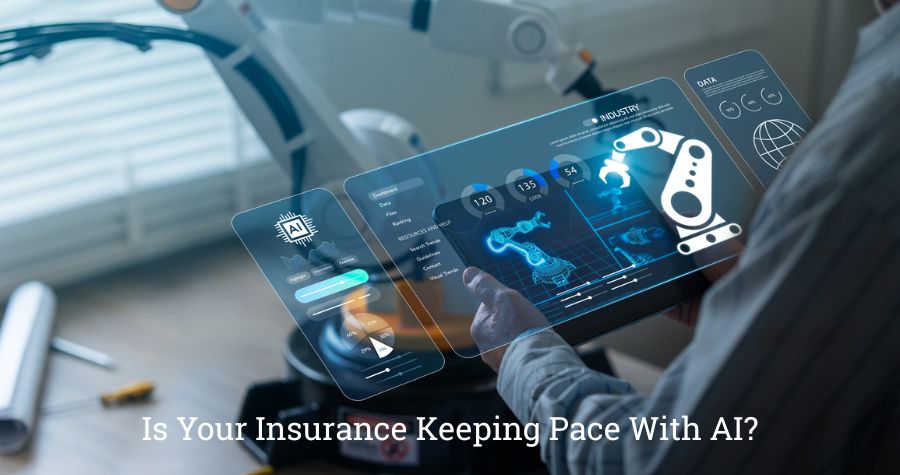
  • AI Is Changing AI Business Risk – Is Your AI Business Risk Insurance Keeping Pace?

    AI Is Changing AI Business Risk – Is Your AI Business Risk Insurance Keeping Pace?

    Artificial intelligence is no longer something businesses are planning to adopt in the future, it’s a business risk that your insurance needs to cover. Your business needs to evaluate its AI business risk now.

    AI is already embedded into day-to-day operations.

    Employees are using AI to prepare reports, write marketing content, analyse data, assist with customer communications and improve productivity. Increasingly, AI is also supporting operational decisions across manufacturing, construction, logistics and professional services.

    For many organisations, this has happened organically – with little formal governance or consideration of how AI changes their overall risk profile.

    That’s why AI has become a business risk issue rather than simply an IT issue.

    The technology itself isn’t inherently risky. The challenge is ensuring that governance, contracts, cyber security and insurance evolve alongside it.

    Research from the British Chambers of Commerce suggests AI adoption among UK businesses is accelerating rapidly, while governance and internal controls are struggling to keep pace.

    AI creates different risks for different industries

    One of the biggest misconceptions is that AI creates the same risks for every business.

    In reality, the insurance implications depend entirely on how AI is being used.

    Construction

    Construction businesses are increasingly using AI to assist with estimating, bid preparation, project planning and document management.

    While these tools improve efficiency, businesses should consider what happens if AI-generated specifications, quantities or documentation contain errors that contribute to contractual disputes or professional negligence claims.

    Professional Indemnity insurance and robust review procedures become increasingly important where AI assists decision-making.

    Manufacturing

    Manufacturers are beginning to use AI to optimise production schedules, quality control and predictive maintenance.

    While these technologies can improve efficiency, businesses should also consider product liability, machinery breakdown and business interruption risks if automated systems make incorrect recommendations or contribute to operational failures.

    Accurate Business Interruption values and Machinery Breakdown cover become increasingly important as production becomes more technology-dependent.

    Haulage & Logistics

    The transport and logistics sector is rapidly adopting AI for route optimisation, fleet management and predictive maintenance.

    As more operational systems become digitally connected, businesses should consider the cyber implications alongside traditional fleet and Goods in Transit risks.

    An AI-enabled business is often a more connected business – and greater connectivity can increase cyber exposure.

    Professional Services

    Perhaps the biggest insurance implications exist for businesses whose advice forms part of the service they provide.

    Whether producing reports, financial analysis, legal documents or consultancy recommendations, AI should support professional judgement – not replace it.

    Businesses should review whether their Professional Indemnity insurance reflects how advice is now being created and delivered.

    Insurance isn’t the only consideration

    Insurance forms one part of effective AI risk management.

    Businesses should also consider:

    • Do we have an AI policy?
    • Which platforms are approved for business use?
    • Can confidential client information be uploaded?
    • Who reviews AI-generated content?
    • Do supplier and customer contracts reflect our use of AI?
    • Are directors comfortable with the governance arrangements?

    Simple governance today can help prevent much bigger issues tomorrow.

    AI doesn’t replace accountability

    One principle remains unchanged.

    If an employee relies on AI to make a decision, produce advice or communicate with a client, responsibility still sits with the business – not the software.

    Human oversight remains essential.

    Is your insurance evolving with your business?

    Most commercial insurance policies weren’t written with generative AI specifically in mind.

    That doesn’t necessarily mean AI-related claims won’t be covered—but it does mean businesses should regularly review how emerging technologies are changing their risk profile.

    At Readhunt, we work closely with businesses across construction, manufacturing, haulage, logistics and professional services to ensure their insurance programme reflects how they operate today – not how they operated five years ago. View more on our Cyber Insurance page.

    As AI continues to reshape the way businesses work, reviewing your insurance alongside your wider risk management strategy has never been more important.

  • Why Commercial Insurance Has Become a Competitive Advantage for UK Subcontractors

    Why Commercial Insurance Has Become a Competitive Advantage for UK Subcontractors

    For many subcontractors, commercial insurance has traditionally been viewed as a compliance exercise – something arranged because a client or contractor requires it. However, today’s commercial landscape is changing. Increasingly, insurance is becoming a key part of winning contracts, managing supply chain risk and demonstrating business resilience.

    For the UK’s subcontractor community, particularly SMEs operating across construction, engineering, facilities management, manufacturing and specialist trades, the conversation has shifted from “Do we have insurance?” to “Do we have the right insurance for the contracts we’re pursuing?”

    Insurance is now part of the procurement conversation

    The introduction of the Procurement Act 2023 has placed greater emphasis on making public sector procurement more accessible to SMEs through increased transparency and simplified bidding processes. While this creates significant opportunities for smaller businesses, it also means organisations need to be ready to meet contractual and risk management expectations once contracts are awarded. Government guidance also makes clear that buyers should avoid creating unnecessary barriers, including requiring insurance to be in place before contract award where it is not legally required, helping reduce upfront costs for SMEs.

    For subcontractors, this means being able to demonstrate that appropriate cover can be arranged quickly and that insurance programmes are aligned with contract requirements.

    Beyond public liability

    Many subcontractors still focus almost exclusively on Public Liability insurance. While essential, it is rarely sufficient on its own.

    Depending on the trade and contractual obligations, businesses should also consider:

    • Employers’ Liability insurance (a legal requirement where applicable)
    • Professional Indemnity insurance for design, consultancy or specification work
    • Commercial Vehicle insurance
    • Contractors’ Plant and Equipment cover
    • Contract Works or Installation cover
    • Cyber insurance for businesses handling client data, digital project information or electronic payment systems
    • Excess Liability or Umbrella insurance for larger projects

    Each contract should be reviewed individually because insurance requirements often differ significantly between clients.

    Contract requirements are becoming increasingly detailed

    Principal contractors and commercial clients frequently request evidence of:

    • Higher liability limits
    • Additional Insured status
    • Waivers of subrogation
    • Primary and non-contributory wording
    • Completed operations cover
    • Up-to-date Certificates of Insurance

    These requirements often sit within subcontract agreements and can delay project mobilisation if businesses are unable to respond quickly.

    Whilst you may have the cover, there are often exclusions or conditions that brokers do not make you aware of that would affect a claim, i.e. locations worked at or upon, heights, depths, also strict conditions have to be followed on some policies when carrying out certain activities.

    Working with an experienced commercial insurance broker can help subcontractors ensure their policies match contractual obligations before tenders are submitted.

    Insurance supports business growth

    Insurance should not simply be viewed as protection against claims.

    An effective insurance programme can:

    • Improve credibility during tender evaluations.
    • Demonstrate strong governance and risk management.
    • Reduce delays during contract mobilisation.
    • Support relationships with larger contractors.
    • Protect cash flow following unexpected incidents.

    For growing SMEs, these benefits can be just as valuable as the financial protection a policy provides.

    A changing market for SME subcontractors

    The Government continues to encourage greater SME participation in public procurement through reforms designed to improve transparency and reduce unnecessary barriers to entry. The Procurement Act and accompanying guidance aim to make it easier for smaller businesses to compete while encouraging contracting authorities to create fairer procurement processes.

    However, greater opportunity also brings greater scrutiny. Larger organisations increasingly expect subcontractors to demonstrate robust risk management, financial resilience and appropriate insurance arrangements before work begins.

    Five questions every subcontractor should ask

    Before bidding for your next project, consider:

    1. Does our insurance reflect the contracts we’re signing, not just the work we perform?
    2. Are our indemnity limits sufficient for larger commercial projects?
    3. Can we meet common contractual insurance requirements without delaying mobilisation?
    4. Have we reviewed emerging risks such as cyber exposure and professional advice?
    5. Are we working with advisers who understand our sector and procurement requirements?

    The Readhunt approach

    At Readhunt, we understand that subcontractors face unique commercial pressures. Insurance is not simply about arranging policies – it’s about helping businesses secure contracts, protect profitability and manage evolving risks.

    Whether you’re a specialist contractor, engineering business, manufacturer or growing SME, reviewing your insurance programme regularly can help ensure it keeps pace with your ambitions.

    Useful resources:

    The right insurance programme should do more than protect your business when something goes wrong – it should help position your business to win the right opportunities in an increasingly competitive marketplace.

  • 2026 HSE Changes: Understanding The New Rules And The Impact On Your Insurance

    2026 HSE Changes: Understanding The New Rules And The Impact On Your Insurance

    The UK’s Health and Safety Executive (HSE) is increasing its focus on workplace health, occupational disease prevention and reporting standards, with several significant developments emerging during 2026.

    Whilst many businesses associate health and safety with accident prevention, the regulator’s priorities are increasingly shifting towards long-term health risks, governance and organisational accountability.

    For SMEs, particularly those operating in construction, manufacturing, engineering, logistics and property services, these changes have implications that extend beyond compliance and into insurance, risk management and business resilience.

    The Biggest Development: Proposed Changes To RIDDOR

    The HSE has launched proposals to modernise the Reporting of Injuries, Diseases and Dangerous Occurrences Regulations (RIDDOR).

    The proposals include:

    • Expanding the list of reportable occupational diseases
    • Broadening the range of healthcare professionals whose diagnoses could trigger reporting obligations
    • Updating dangerous occurrence reporting requirements to better reflect modern workplaces

    If implemented, businesses may need to review existing incident reporting procedures, occupational health arrangements and record-keeping practices.

    Occupational Health Under The Spotlight

    Historically, workplace injuries have received the greatest attention from employers. However, occupational illness is becoming a key focus for both regulators and insurers.

    Areas attracting increased scrutiny include:

    • Respiratory disease
    • Silica dust exposure
    • Occupational cancers
    • Noise-induced hearing loss
    • Long-term workplace health conditions

    These risks often result in higher-value claims and can create significant long-term liabilities for businesses.

    Increased Enforcement Activity

    The HSE has signalled increased enforcement activity across sectors where workplace health risks are prevalent.

    This includes greater focus on:

    • Dust and airborne contaminants
    • Health surveillance programmes
    • Contractor management
    • Risk assessment quality
    • Senior management oversight

    Businesses unable to demonstrate effective controls may face enforcement action, reputational damage and increased insurance scrutiny.

    What Does This Mean For Insurance?

    Many insurers are increasingly using risk management and governance standards as part of their underwriting assessment.

    Businesses that can demonstrate

    • Effective reporting processes
    • Strong health and safety culture
    • Clear management oversight
    • Robust occupational health controls

    are often viewed more favourably during renewal discussions.

    Conversely, poor reporting standards, enforcement notices or weak governance can affect insurer appetite and pricing.

    Sector-Specific Considerations

    Construction & Engineering : Construction businesses should review controls around silica exposure, contractor management, working at height and incident reporting.

    Manufacturing: Manufacturers should focus on occupational health monitoring, machinery safety, noise exposure and employee wellbeing programmes.

    Logistics & Distribution: Warehouse operations, fleet risk management, manual handling and workforce safety remain key priorities.

    Property & Facilities Management: Businesses operating in multi-contractor environments should ensure robust contractor oversight and compliance processes.

    How Businesses Can Prepare

    Now is an ideal time for organisations to review:

    1. Incident and near-miss reporting procedures
    2. Health and safety governance structures
    3. Occupational health monitoring programmes
    4. Contractor management controls
    5. Risk assessment and documentation standards

    By acting early, businesses can improve compliance, strengthen their risk profile and create more positive outcomes during insurance renewals.

    Supporting Businesses Through Change – Practical Steps SMEs Should Take Now

    At Readhunt, we believe effective insurance advice goes beyond policy placement. To prepare for evolving HSE requirements and demonstrate a proactive approach to risk management, SMEs should consider:

    • Reviewing incident, accident and near-miss reporting procedures to ensure they remain robust and compliant.
    • Assessing occupational health risks across the business, particularly those associated with dust, noise, repetitive tasks and long-term health conditions.
    • Updating risk assessments and ensuring they accurately reflect current workplace activities and emerging regulatory expectations.
    • Strengthening contractor management processes, including due diligence, supervision and record keeping.
    • Establishing clear health and safety accountability at senior management level and regularly reviewing governance arrangements.
    • Improving documentation and audit trails to support compliance and demonstrate effective risk controls.
    • Engaging employees in health and safety initiatives to encourage reporting, awareness and a positive safety culture.
    • Identifying and addressing any compliance gaps before they become regulatory, operational or insurance concerns.

    Taking these steps now can help businesses reduce regulatory exposure, improve workplace safety and present a stronger risk profile to insurers, clients and other stakeholders.

    By helping businesses understand emerging regulatory requirements and strengthening their approach to risk management, we support clients in protecting their people, improving resilience and demonstrating their value to insurers.

    If you’d like to discuss how these developments could affect your business, our team would be happy to help. Contact us on info@readhunt.co.uk.